For Business & Farm
Commercial & Agricultural Solar in Vernon, BC
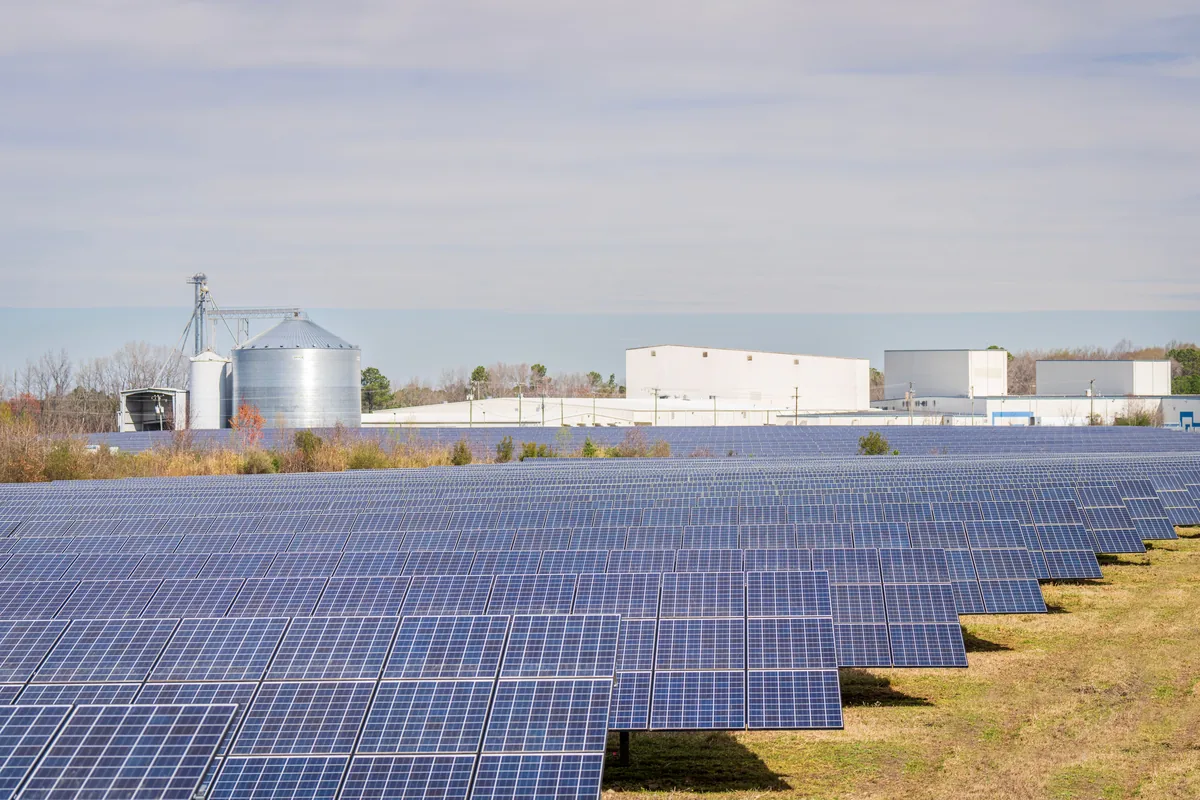
Businesses and farms across the North Okanagan sit under more unused roof and open land than almost any other property type. That space has a dollar value.
Solar for North Okanagan Businesses, Orchards and Farms
Commercial power costs behave differently from residential ones. Alongside the energy you consume there are demand charges tied to your peak draw, and for many operations that peak lands squarely in the middle of a summer afternoon — which is precisely when a solar array is producing hardest.
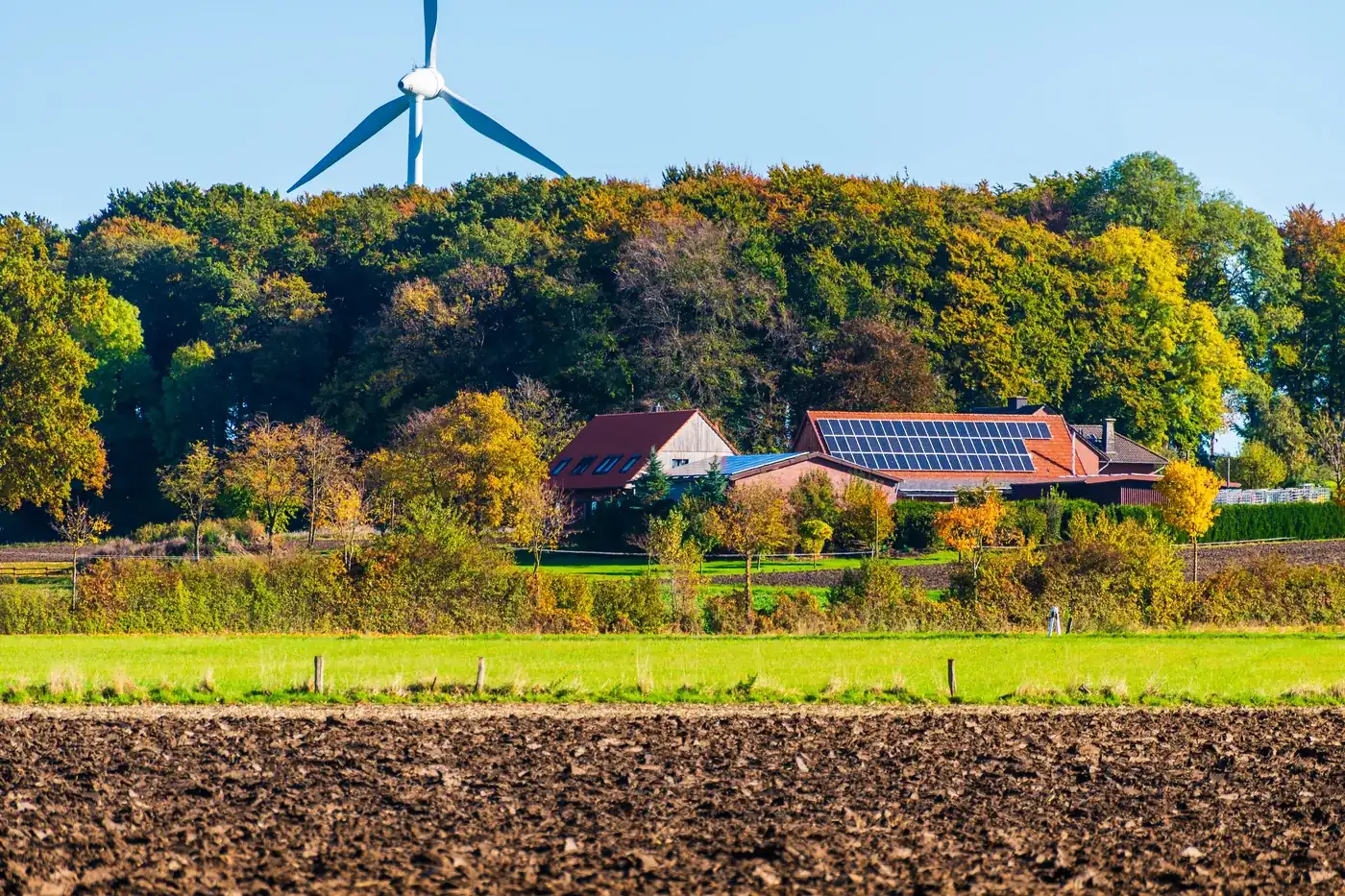
That timing is what makes commercial solar work here. An orchard running irrigation pumps through July, a winery running cooling through harvest, a shop with a compressor cycling all afternoon — these are load profiles that line up well with generation, and they are common right across Coldstream, Lavington, Spallumcheen and Armstrong.
We work with packing sheds, equipment shops, dairy and livestock operations, wineries, small manufacturers, storage facilities and strata buildings. What they have in common is not the industry — it is unused roof or open ground, a meaningful power bill, and consumption that happens while the sun is up. If your operation has two of those three, the numbers are usually worth running.
One thing worth saying early: a commercial quote is not a scaled-up residential one. Structural capacity, three-phase service, demand-charge structure and available ground all move the answer, and any of them can make roof-mount the wrong choice on a building that looks ideal from the road.
Call 250-250-2525 with a recent power bill in hand and we can give you a rough scale and payback on the call.
Proud to Serve the North Okanagan
We install throughout Vernon and the surrounding region.
- ColdstreamBC
- Okanagan LandingVernon, BC
- East HillVernon, BC
- BXVernon, BC
- LumbyBC
- ArmstrongBC
- EnderbyBC
- SpallumcheenBC
- Lake CountryBC
- KelownaBC
- Salmon ArmBC
- Silver StarVernon, BC
What a Commercial Installation Covers
Load profile and demand analysis
We look at consumption and at when it happens. Reducing a demand peak is often worth more than reducing total kilowatt-hours, and that changes how the system should be sized and oriented.
Roof or ground-mount design
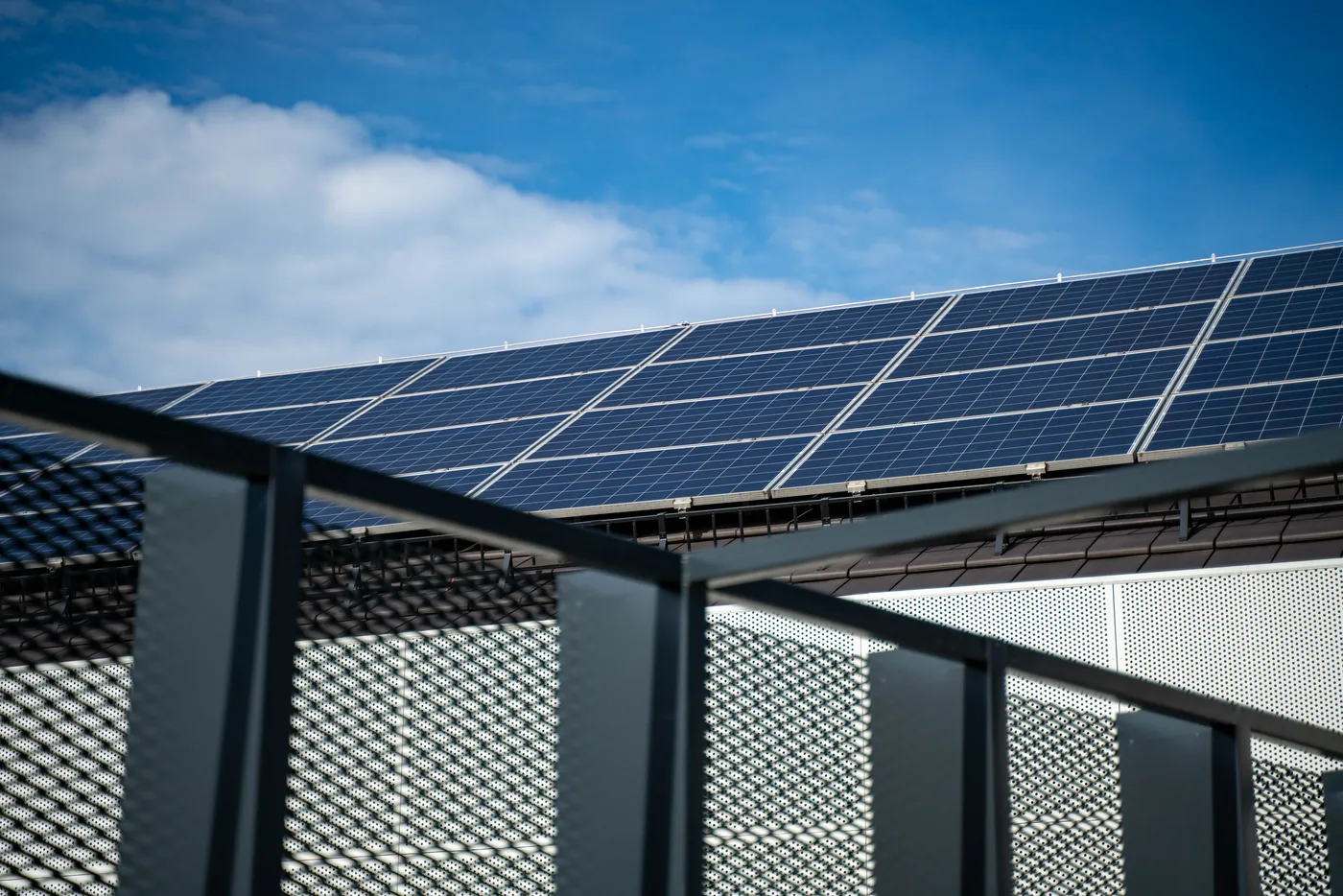
Agricultural properties frequently have better ground than roof — poor building orientation, ageing steel, or structures never engineered for added load. Ground-mount costs more per watt but removes those constraints and makes maintenance easier.
Structural assessment
Before anything goes on a commercial or farm roof we confirm the structure will carry it under local snow loading. On older barns and packing sheds this is the step that decides roof versus ground.
Three-phase and high-capacity electrical
Commercial sites commonly run three-phase service. All electrical work is carried out by licensed electricians, with permits pulled and the system commissioned to the utility’s interconnection requirements.
Permits, interconnection and utility coordination
Larger systems involve more utility process than a house does. We handle the application and coordination.
Production monitoring and reporting
Per-string monitoring with reporting you can put in front of an accountant or a board, and use for any sustainability reporting your buyers ask for.
What Commercial Solar Costs
| System size | Suits | Installed cost |
|---|---|---|
| 20 kW | Small business, shop, packing shed | from $44,000 – $58,000 |
| 50 kW | Winery, mid-size operation, large farm | from $105,000 – $140,000 |
| 100 kW+ | Large agricultural or industrial site | from $200,000 |
Commercial pricing varies more than residential because structure, electrical service and mounting type differ so much between sites. Per-watt cost generally falls as systems scale. Every commercial quote follows a site assessment.
Commercial systems commonly show shorter payback than residential ones, because higher consumption, demand-charge reduction and better per-watt pricing at scale all push the same direction. Capital cost treatment may also differ for a business — worth a conversation with your accountant alongside our numbers.
Why Businesses Choose Us
We model the demand charge, not just the kilowatt-hours
For a lot of commercial accounts that is where the real saving sits, and it is routinely left out of solar proposals.
Agricultural buildings are normal work for us
Barns, packing sheds, equipment shops and irrigation infrastructure across the North Okanagan — including deciding honestly when the ground beats the roof.
Licensed electricians, permits, full interconnection
Carried out by our team and our vetted contractor partners, commissioned to the utility’s requirements.
One point of contact
From assessment to commissioning, you deal with us — not a rotating cast of subcontractors.
Find out what solar would do for your power bill.
A free estimate takes about fifteen minutes on the phone. No pressure, no obligation, and a straight answer either way.
How a Commercial Project Runs
Bill and load review
Twelve months of consumption and demand data. Often enough for a rough scale on the first call.
Site assessment
Roof structure, orientation, electrical service, ground availability.
Design, quote and payback modelling
System size, expected output, demand-charge impact, payback — in writing.
Permits, install and commissioning
Utility coordination, installation, inspection, handover.
Commercial timelines run longer than residential, mostly on structural review and utility process. We will give you a realistic schedule with the quote.